“T68 Panhandle Scrap Silverback’s”
Grading, Recognition, and Market Influence in T68 Men of History
by D.B. Sikes
Introduction
Within the T68 Men of History series, few back variations carry the mystique and structural clarity of the Pan Handle Scrap Silver Back. Limited to the second series of fifty subjects, the Silver Back has emerged not only as a recognized subtype but as a uniquely defined category within the broader T68 ecosystem.
What sets the Silver Back apart is not simply its scarcity, but its consistent recognition within third-party grading systems, particularly when compared to other established back variations that remain largely unlabeled. Through the lens of The Sikes Collection, this article examines how grading companies—most notably PSA and SGC—approach Silver Back attribution, and how that recognition shapes collector behavior, registry competition, and market perception.
The Silver Back Defined
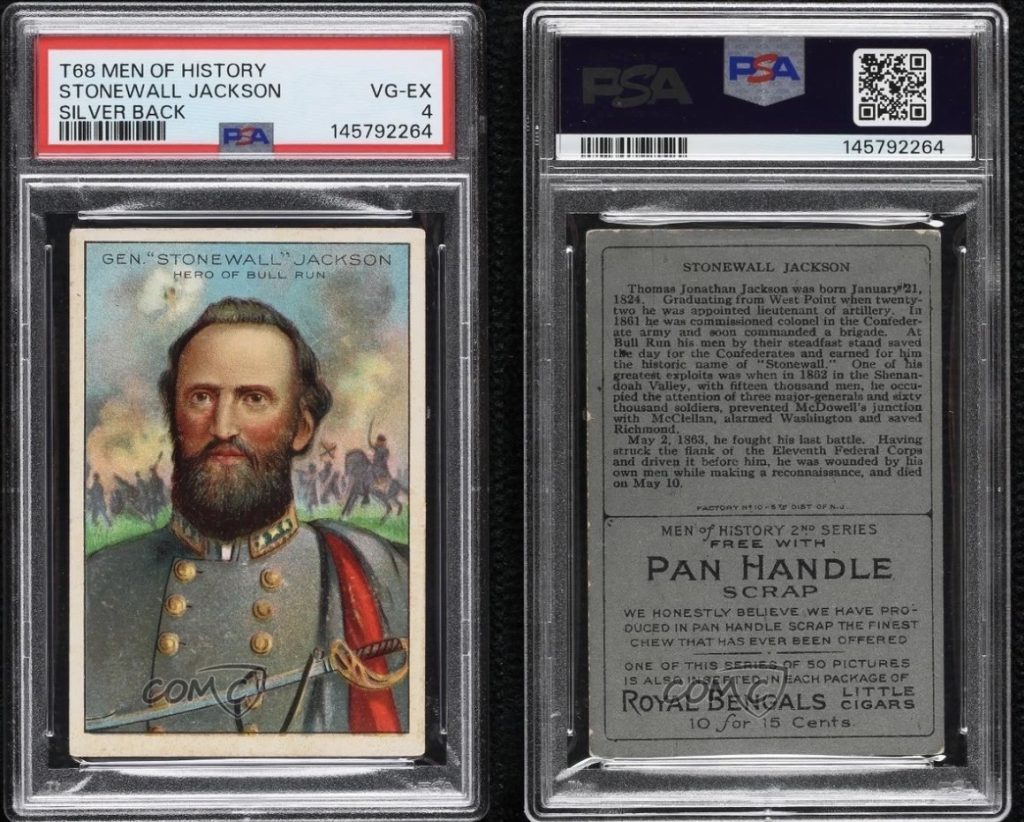
The Pan Handle Scrap Silver Back represents a distinct printing variation within Series 2 of the T68 issue. Unlike the blue ink spectrum documented in Pan Handle Scrap examples, Silver Backs exhibit a muted gray to metallic-toned impression, often with softer ink saturation and a flatter visual texture.
Restricted to fifty subjects, these cards form a closed parallel subset, making them one of the few clearly bounded variation groups within the T68 set. This structural clarity contributes significantly to their collectibility.
Recognition Across Grading Companies
Both PSA and SGC consistently identify Silver Back examples on their holders, distinguishing them from standard Pan Handle Scrap cards. This shared recognition establishes a baseline legitimacy for the variation across the hobby.
However, the distinction lies not in whether the variation is labeled—but in how that label is utilized.
PSA
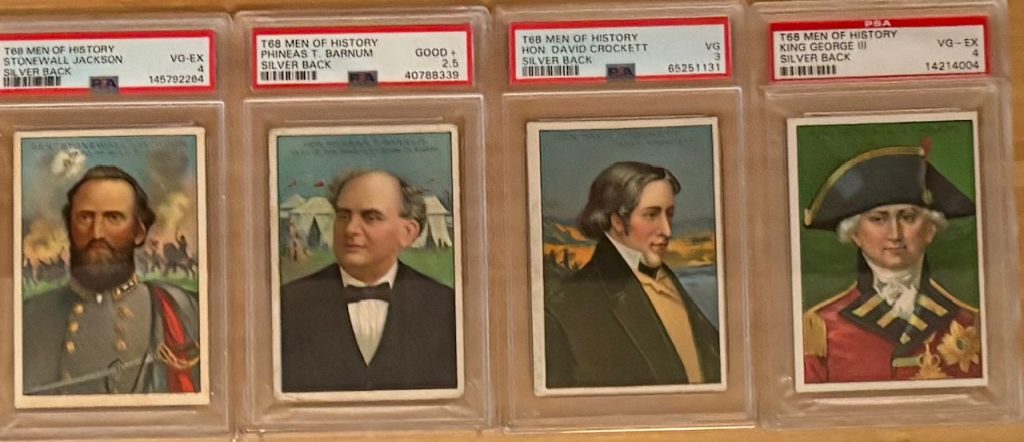
PSA’s labeling of “Silver Back” integrates directly into its Set Registry system. This creates:
• A defined checklist within a competitive framework
• Population tracking tied to the variation
• Increased visibility through registry participation
As a result, PSA-labeled Silver Backs benefit from structured demand and market clarity.
Link to population report:
PSA T68 Silverback population report
SGC
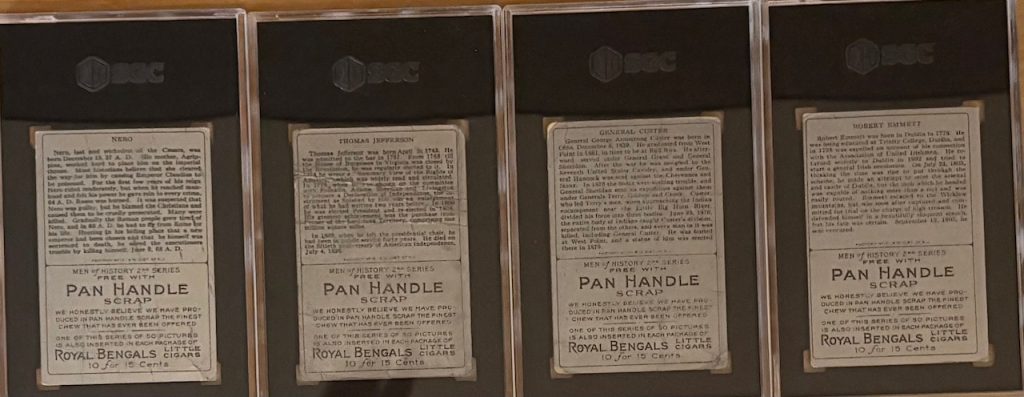
SGC similarly identifies Silver Back examples, preserving accuracy in classification and maintaining strong credibility within vintage grading. However:
• No registry system exists to track variation-specific sets
• Population visibility is less centralized
• Market competition is less formally structured
SGC’s approach emphasizes historical integrity and presentation, while PSA extends into competitive ecosystem building.
Link to population report
SGC T68 Silverback Population Report
Selective Recognition Within the T68 Set
A critical observation emerges when examining the broader T68 landscape:
PSA consistently labels Silver Backs, yet does not delineate other recognized variations, including:
• Royal Bengals (Factory distinctions)
• Miners Extra (regular and short cut)
• Natural Leaf
• Pan Handle Scrap Blue shade classifications
This creates a condition of selective visibility, where one variation benefits from clear identification while others remain embedded within standard labels.
The implication is significant:
The hobby does not merely respond to rarity—it responds to what is visibly defined.
The Sikes Collection: A Condition Spectrum Study
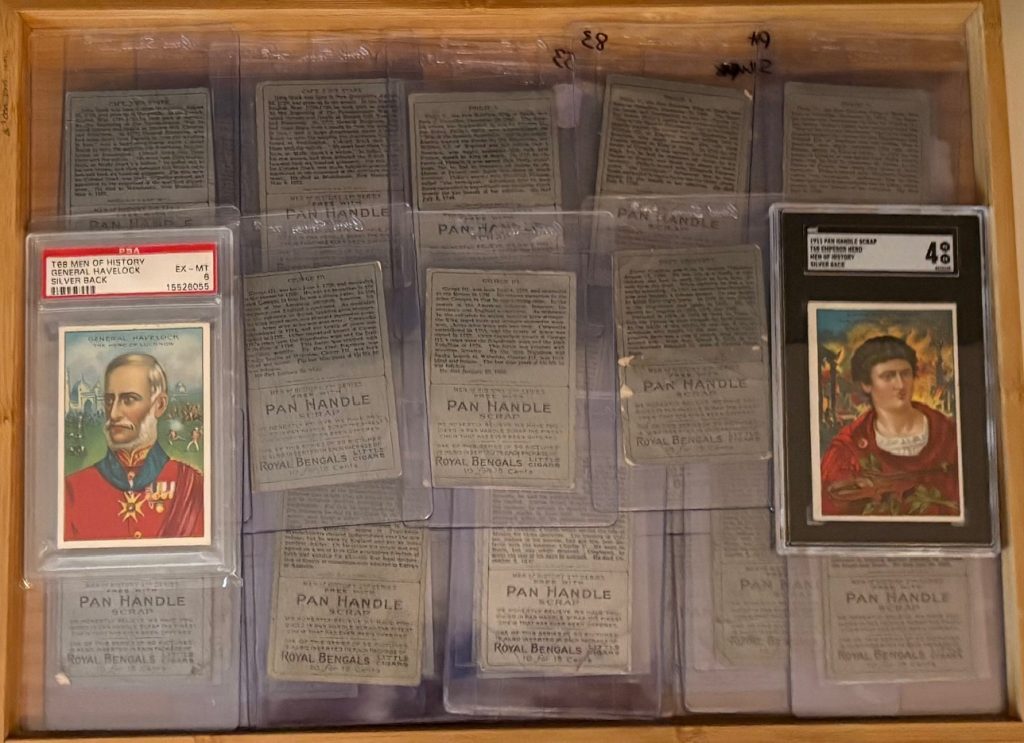
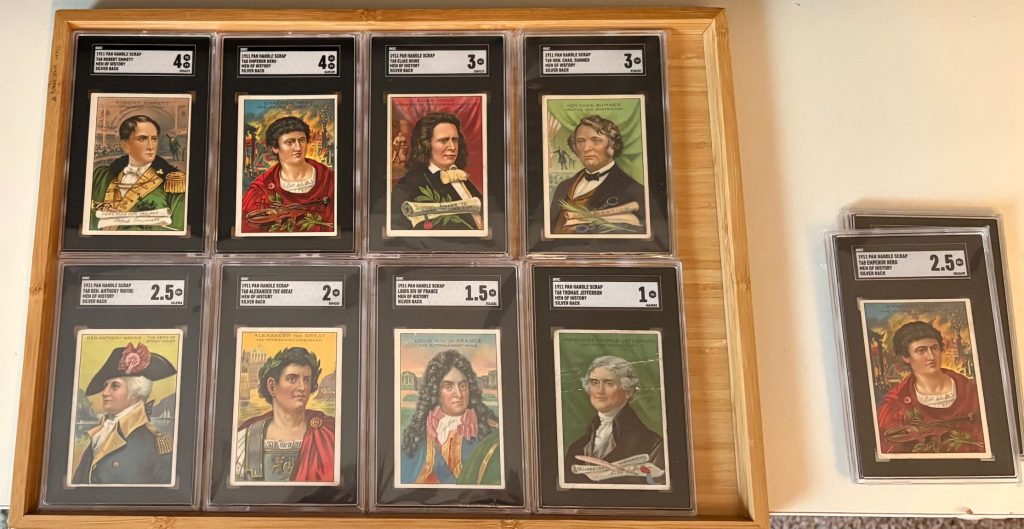
The Sikes Collection provides a controlled visual dataset of Silver Back examples across multiple grade levels, acquired through both public auction and private sale over a five-year period.
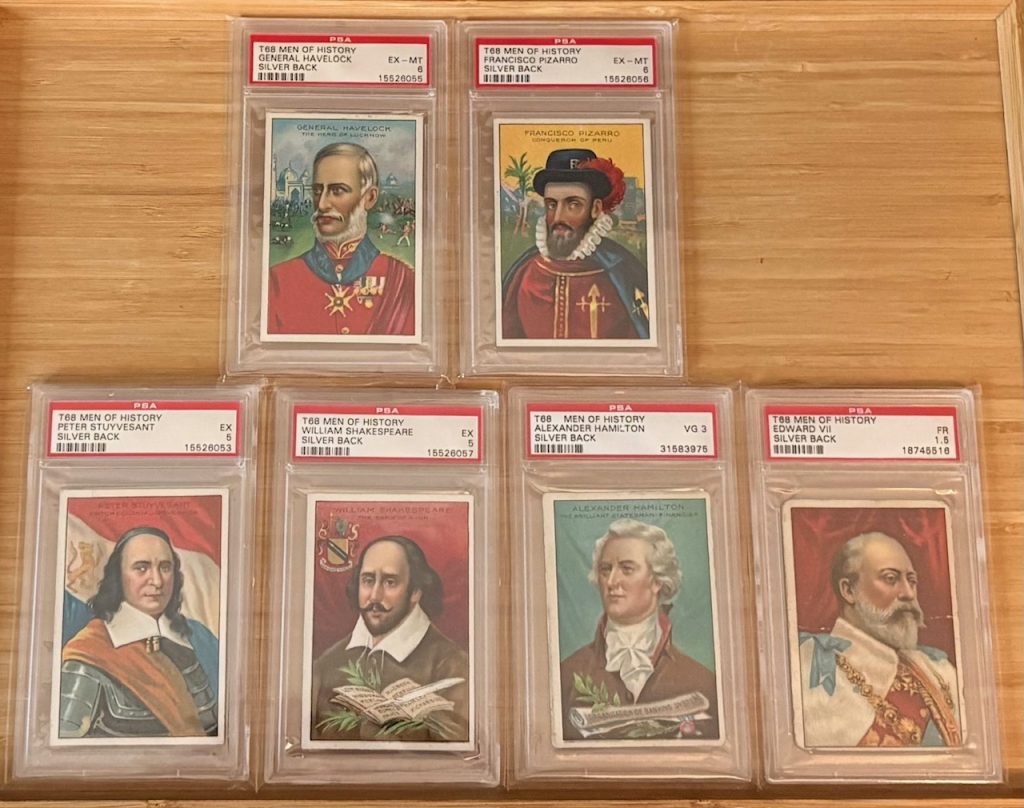
The six-card grouping presented here spans the grading spectrum:
• Fair 1.5
• VG 3
• EX 5
• EX-MT 6
Subjects include Edward VII, Alexander Hamilton, Peter Stuyvesant, William Shakespeare, Francisco Pizarro, and General Havelock.
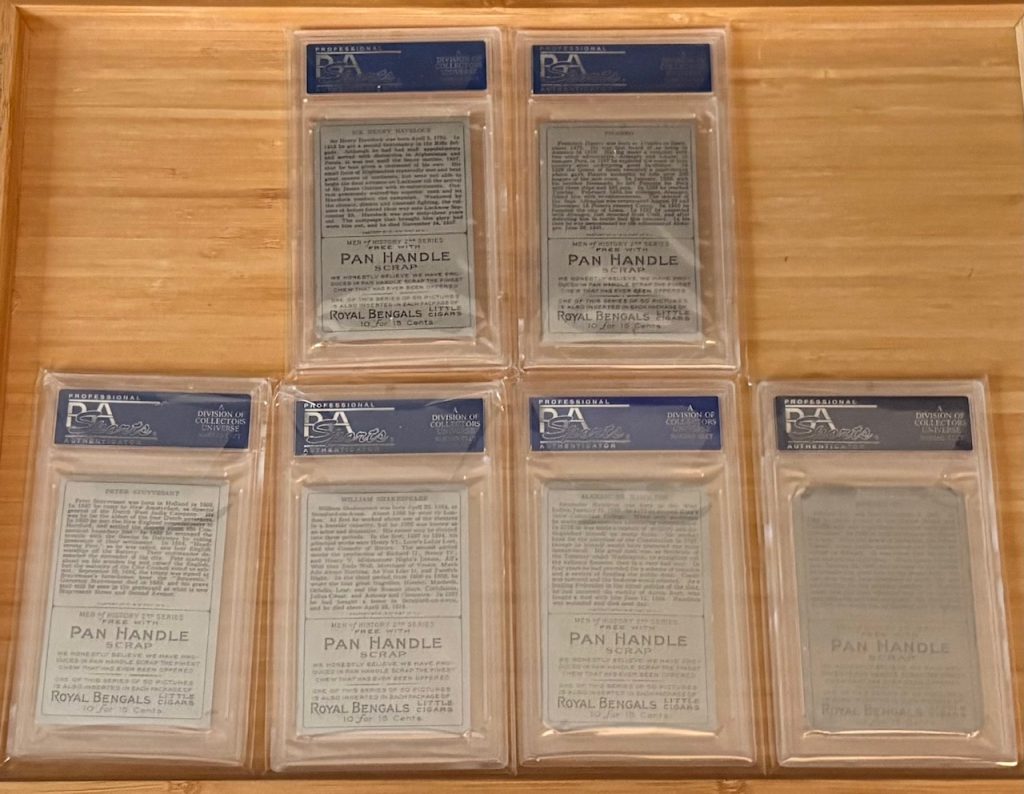
This range allows for direct observation of:
• Print clarity versus assigned grade
• Back legibility under varying wear conditions
• Edge and surface degradation patterns specific to Silver Back stock
Notably, higher-grade examples such as the EX-MT General Havelock demonstrate strong ink retention and uniform tonality, while lower-grade examples retain identifiable Silver Back characteristics despite structural wear.
Market Implications
The combination of:
• A fixed 50-card subset
• Consistent third-party labeling
• Registry integration (PSA)
has positioned Silver Backs as one of the most accessible structured challenges within T68 master set collecting.
Collectors pursuing completion benefit from:
• A known checklist
• Searchable inventory through labeled slabs
• Competitive incentives through registry ranking
In contrast, equally rare or rarer back types lacking consistent labeling remain dependent on advanced collector knowledge and manual identification, limiting broader market participation.
Key Subject Hierarchy / Toughest Targets
While every Pan Handle Silverback is desirable due to its limited Series 2-only production, not all Silverbacks carry equal weight within the hobby. Scarcity alone tells only part of the story. The most important examples combine three elements: confirmed rarity, subject demand, and long-term collector desirability. Using the official T68 Heroes of History 4 Tier Collector System as a framework, the following subjects represent the premier chase cards within the Silverback subset. These are the cards most likely to generate advanced collector interest whenever examples surface.
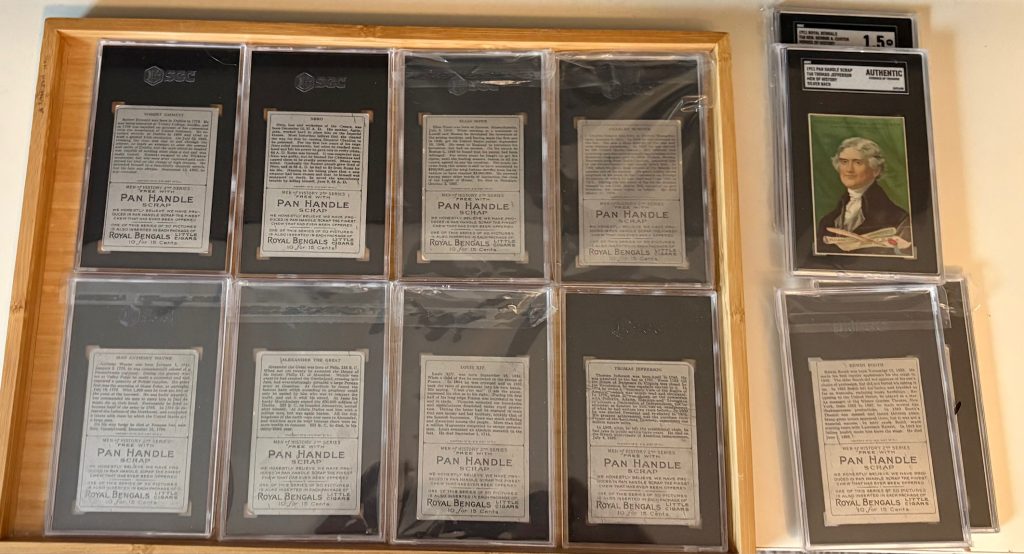
Elite Silverback Tier
- Stonewall Jackson
The benchmark card of the Silverback run. Only two graded examples are publicly confirmed, one PSA 4 and one SGC 4. When paired with Jackson’s Tier 2 Core Set Icon status, this produces one of the strongest scarcity profiles in the entire subset and a leading candidate for the most difficult confirmed Silverback subject. - Thomas Jefferson
A premier name within the Series 2 checklist. Jefferson combines Founding Father prestige, presidential demand, and enduring collector appeal. Any confirmed Silverback example would immediately rank among the most desirable cards in the run. - General George Armstrong Custer
Custer benefits from strong crossover demand across military, frontier, and Americana collecting categories. His cards consistently attract interest beyond set builders, amplifying the significance of any scarce back variation. - P. T. Barnum
A hobby-favorite personality subject whose appeal extends beyond traditional historical categories. Barnum’s widespread recognition and collector following elevate his standing within the Silverback hierarchy. - Davy Crockett
A Tier 2 Core Set Icon whose Americana legacy and broad recognition make him one of the most compelling Silverback targets. Strong demand intersects directly with structured scarcity.
Major Silverback Targets
- Andrew Jackson
Presidential status and historical prominence make Jackson a foundational Silverback pursuit within the Series 2 group. - Alexander Hamilton
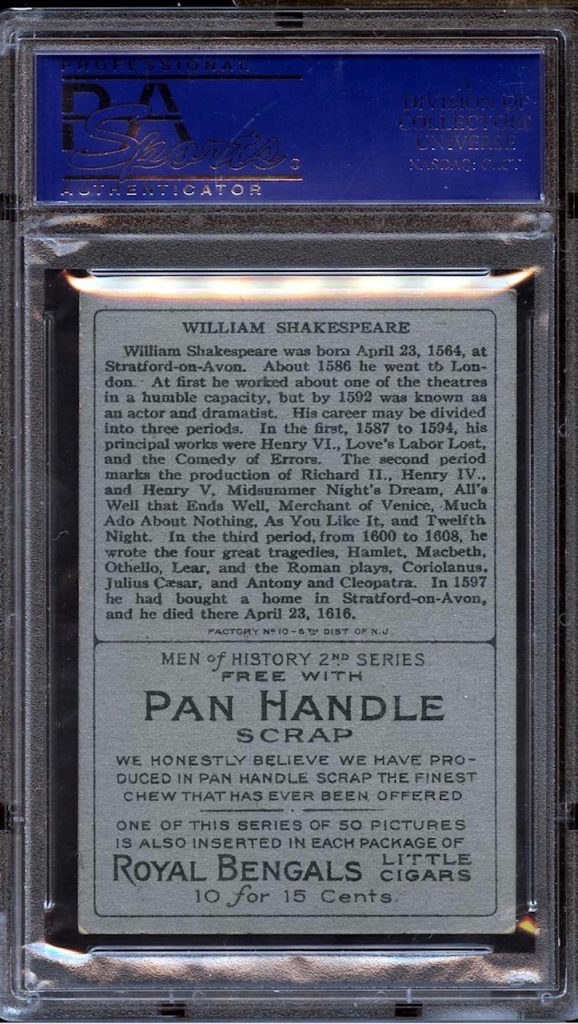
Modern cultural relevance combined with Founding Era importance has elevated Hamilton into one of the stronger demand drivers in the set. - William Shakespeare
Literary icon status creates unusually broad crossover demand, extending beyond traditional tobacco card collectors.
Confirmed and Structurally Valid Secondary Targets
Other desirable Series 2–eligible Silverback subjects include:
- Julius Caesar
- Alexander the Great
- Joan of Arc
- Queen Elizabeth
- Christopher Columbus
- James Monroe
These subjects remain highly collectible and can present meaningful difficulty when confirmed Silverback examples surface, though they do not consistently reach the demand or scarcity profile of the elite tier.
Final Perspective
The Pan Handle Silverback subset already represents one of the most specialized pursuits in T68 collecting. Within that scarce run exists a second level of challenge: securing the right names. Cards such as Stonewall Jackson, Jefferson, Custer, Barnum, and Crockett are not simply scarce backs. They are cornerstone subjects where rarity and demand intersect. For advanced collectors, these are the true trophies of the Silverback chase.
⸻
Conclusion
The Silver Back occupies a unique position within the T68 Men of History set—not solely because of its scarcity, but because of its recognition and reinforcement within the grading ecosystem.
While both PSA and SGC accurately identify the variation, PSA’s integration of that designation into its registry framework amplifies visibility, demand, and competitive engagement.
Through The Sikes Collection, it becomes evident that grading is not simply a process of evaluation, but a mechanism that influences how rarity is perceived, pursued, and ultimately valued.
Final Reflection
In a set defined by complexity, nuance, and overlooked variation, the Silver Back stands apart as a rare convergence of:
• Defined structure
• Recognized classification
• Market visibility
It is, in many ways, the standard by which all other T68 variations might one day be understood.
Leave a Reply