By DB Sikes
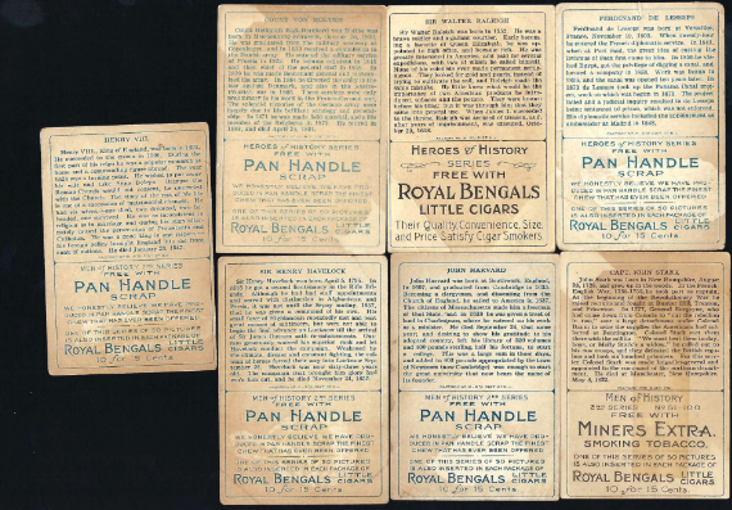
In the golden age of tobacco advertising, trading cards were never intended to survive in pristine condition. They were functional objects, inserted into packages of chewing tobacco or cigars, handled in retail environments, and exposed to oils, humidity, and organic material over time. Today, many T68 Heroes of History cards carry the physical imprint of that origin in the form of tobacco staining.
Far from being a flaw, this staining serves as direct evidence of how these cards were distributed and stored. For collectors who value originality and historical context, stained examples provide something a clean card cannot: a preserved connection to the tobacco trade itself.
What Is Tobacco Staining?
Tobacco staining refers to the brown, tan, or amber discoloration caused by prolonged exposure to tobacco products and their associated oils. The porous stock used in early twentieth-century cards readily absorbed nicotine residue and environmental humidity, particularly when placed in direct contact with loose tobacco or tightly packed product.
These effects typically appear:
• As warm, even toning across portions of the card
• Along edges and surfaces where contact occurred
• In controlled gradients rather than sharp or chaotic patterns
Most importantly, tobacco staining is non-destructive to the structure of the card. The paper remains intact, flat, and stable, even when heavily toned.
Three Examples from the Collection
The range of tobacco staining can be clearly seen across three Pan Handle Scrap examples, each representing a different level of exposure and interaction with the original packaging environment.
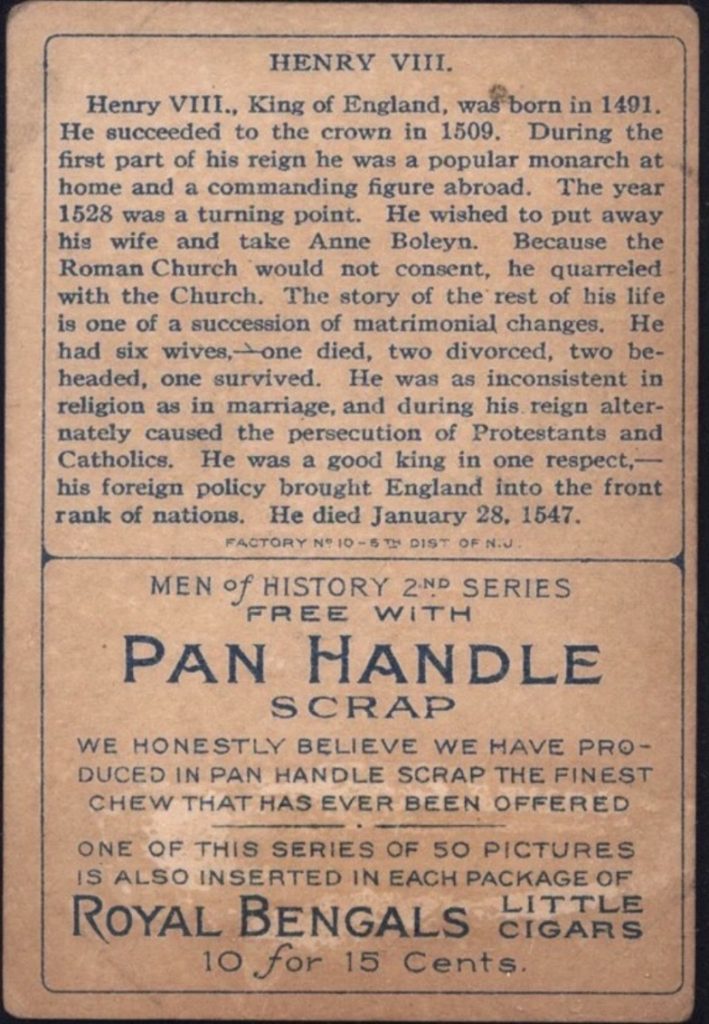
Henry VIII – Heavy Staining
This example represents true high-end tobacco saturation. The toning is deep, consistent, and fully integrated into the paper stock, covering a large portion of the back. The coloration is warm and uniform rather than blotchy, indicating prolonged direct contact with moist tobacco material. Despite the intensity, the card retains structural integrity with no fiber breakdown, confirming this as environmental absorption rather than damage.
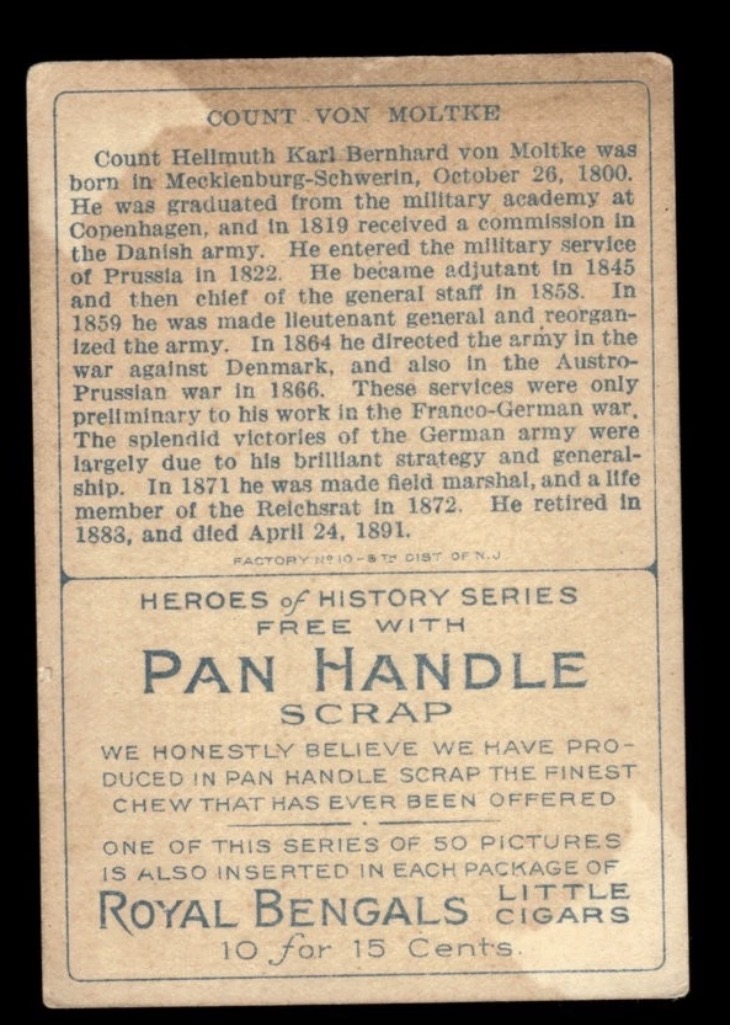
Count von Moltke – Moderate Staining
The Moltke example presents a balanced, mid-level toning that is clearly visible but not fully saturated. The staining appears more controlled and slightly less penetrative than the Henry example, suggesting intermittent or less direct contact with tobacco product. The surface remains smooth and stable, with strong readability and no signs of structural disruption.
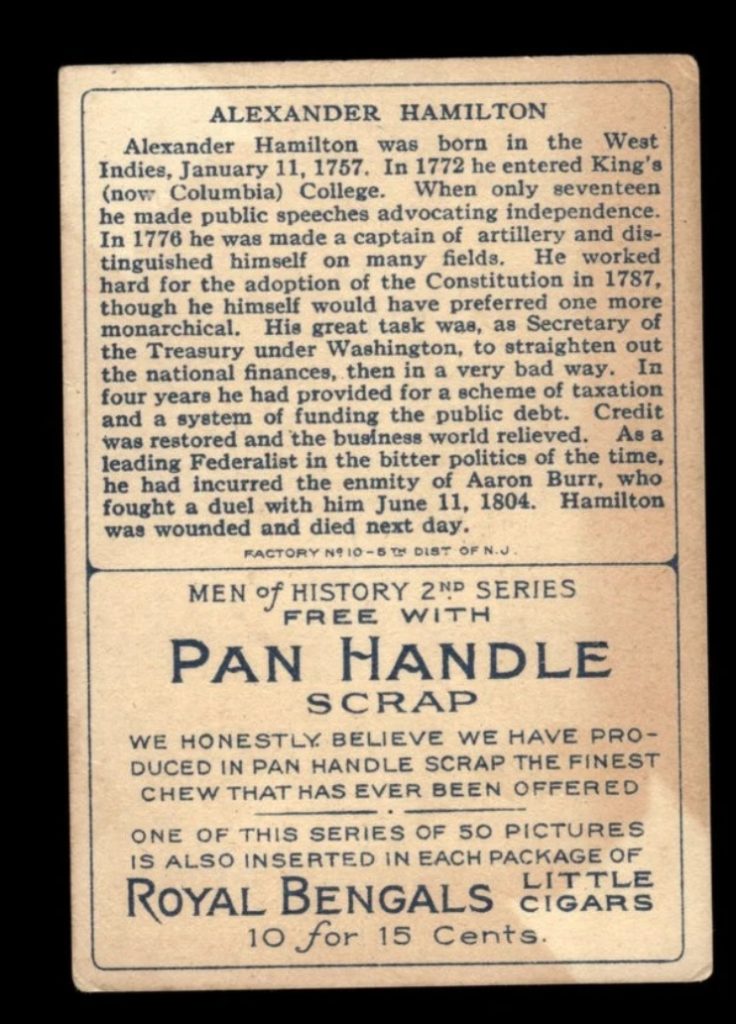
Alexander Hamilton – Light Staining
The Hamilton example displays minimal discoloration, limited to subtle edge toning and faint background warmth. This type of staining indicates indirect environmental exposure, likely from proximity within packaging rather than direct contact with tobacco material. The card retains a largely original paper tone with only slight influence from its surroundings.
Together, these three examples establish a clear and accurate spectrum: light exposure, moderate contact, and heavy saturation.
Introducing a True Contrast: Water Damage
To properly understand tobacco staining, it is critical to contrast it with actual damage. The Ethan Allen example provides a clear and instructive case of water exposure, which differs fundamentally in both appearance and impact.
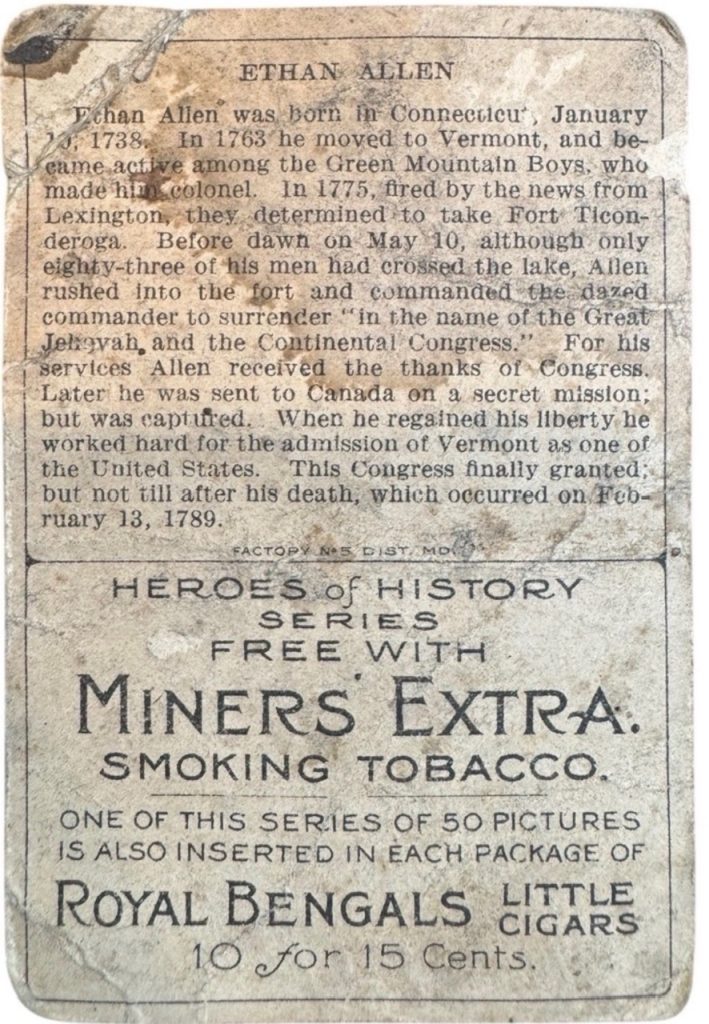
Unlike tobacco staining, water damage is structural. It alters the physical composition of the card rather than simply changing its color.
The Ethan Allen example shows:
• Fiber swelling and contraction, visible as wrinkling and surface distortion
• Irregular blotching and tide patterns, where moisture moved across the card
• Breakdown of the paper surface, including lifting and abrasion
• Loss of uniformity, with gray and uneven discoloration rather than warm toning
Where tobacco staining is absorbed evenly into the paper, water damage disrupts it. The result is not a patina, but deterioration.
Key Visual Differences
The distinction can be summarized clearly:
Tobacco Staining
• Warm brown or amber tones
• Even or gradually blended distribution
• Flat, stable paper surface
• No fiber disruption
• Reflects environmental exposure
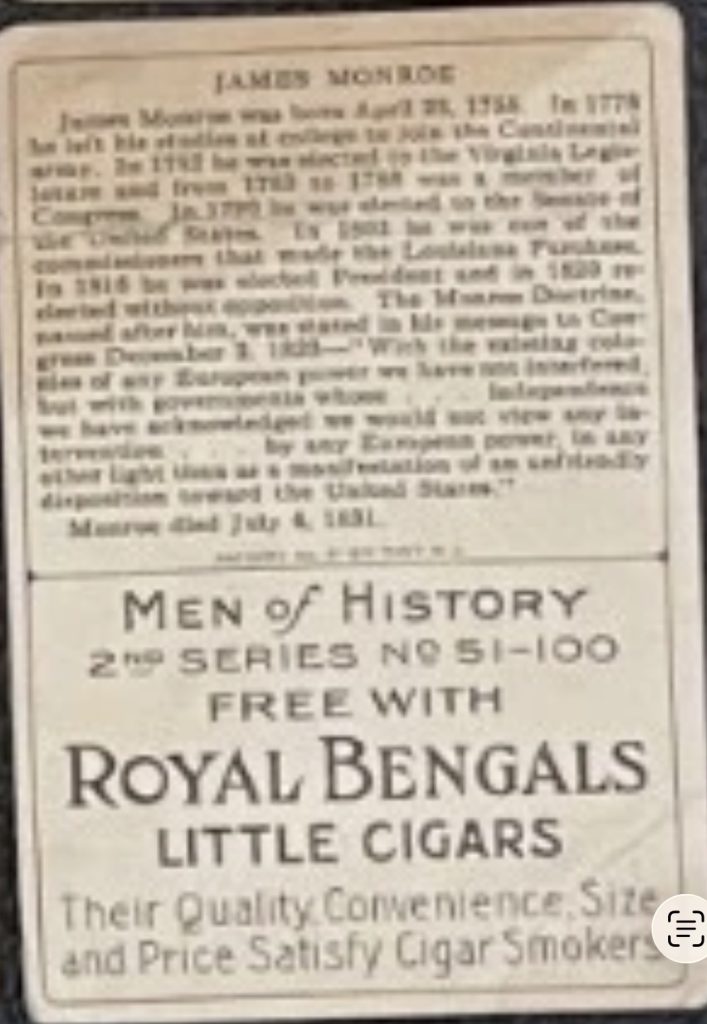
Water Damage
• Gray, dark, or muddy discoloration
• Blotchy, irregular patterns with tide lines
• Wrinkling, warping, and texture changes
• Fiber breakdown and surface lifting
• Reflects structural deterioration
Factory and Brand Influence
Staining patterns on T68 Heroes of History cards are not random; they often correlate directly with the type of tobacco product and the distribution environment in which the cards were handled. Understanding these differences provides important context for interpreting both the intensity and character of staining observed across various backs.
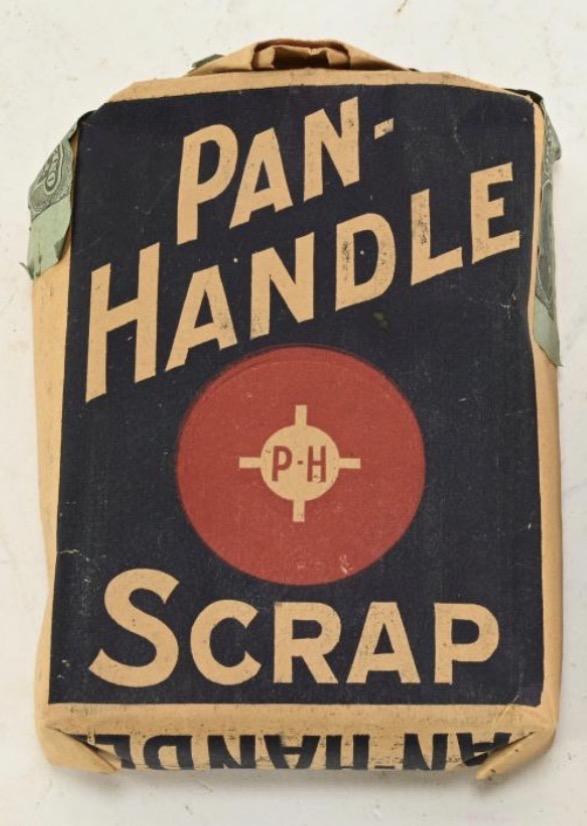
Pan Handle Scrap, produced at Factory No. 10 in the 5th District of New Jersey, is consistently associated with heavier and more pervasive staining. As a chewing tobacco product, it introduced higher levels of moisture and more direct physical contact with the card stock. These conditions created an environment where tobacco oils and residue could be readily absorbed into the paper, resulting in the darker, more uniform brown toning often seen on these examples.
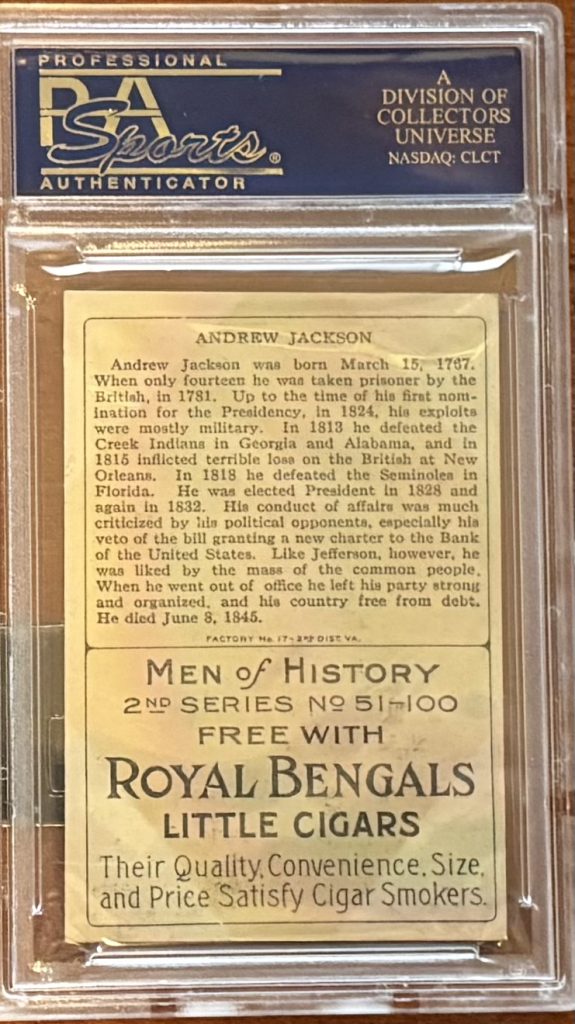
By comparison, cigar-associated distributions such as Royal Bengals typically exhibit lighter and more localized toning. The drier nature of cigar packaging, combined with less direct contact between the tobacco product and the inserted card, limited the degree of absorption. As a result, Royal Bengals backs more often show subtle edge toning, faint spotting, or minimal discoloration rather than the deeper saturation seen with chewing tobacco issues.
These distinctions are critical when evaluating condition and authenticity. A heavily stained Pan Handle Scrap example may reflect expected environmental exposure, while a similarly heavy stain on a Royal Bengals card could warrant closer examination. Ultimately, staining patterns serve as a reflection of the physical realities of early 20th-century tobacco packaging and distribution, linking each card not only to its subject but to the specific product that carried it into circulation.
A Collector’s Perspective
In traditional grading, staining can reduce technical grade. However, within advanced collecting circles, tobacco staining is increasingly understood as a marker of originality.
It provides:
• Evidence of authentic distribution conditions
• Insight into storage and handling environments
• A unique visual signature tied to tobacco-era use
Like patina on early coins, staining reflects history rather than damage.
⸻
Conclusion: Distinguishing History from Harm
The T68 Heroes of History cards were products of the tobacco industry, and their condition often reflects that origin. Tobacco staining represents environmental interaction and historical authenticity. Water damage represents structural compromise.
From the deep, stable saturation of Henry VIII to the controlled toning of Count von Moltke and the light exposure of Alexander Hamilton, tobacco staining tells the story of how these cards lived. The Ethan Allen example, by contrast, shows what happens when that history crosses into damage.
For collectors seeking to understand the set at a deeper level, this distinction is essential.
The stain is history.
The damage is not.
Leave a Reply